
Latest Articles
How to Find a Reliable Factory in China: Audit, Quality Control & Real Sourcing Insights
How to Find a Reliable Factory: A Practical B2B Perspective from Real Supply Chain Experience
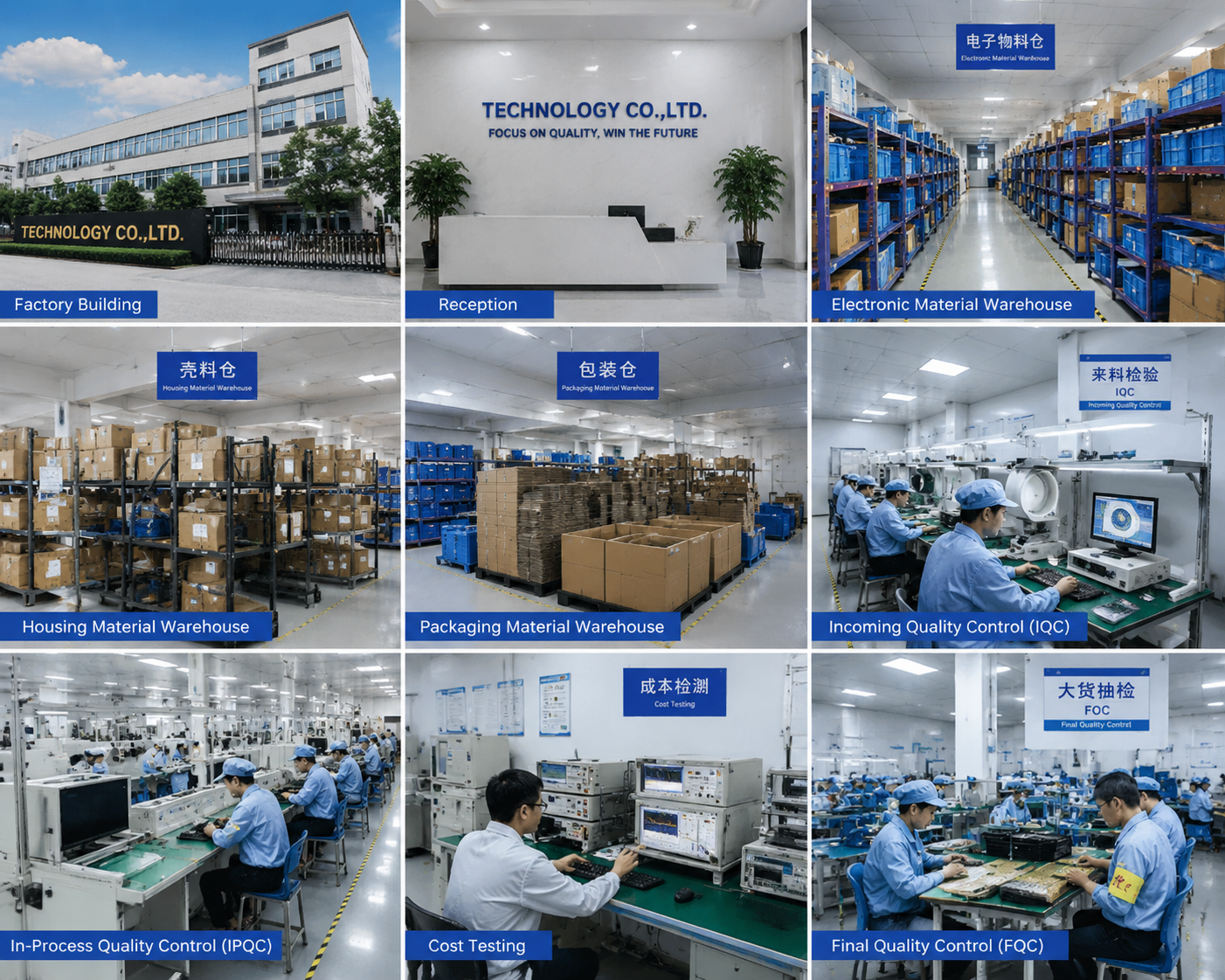
In global sourcing, choosing the right factory is not just about price. It is about risk control, quality stability, and long-term cooperation ability. Different buyers—large corporations and small-to-medium importers—often evaluate factories in very different ways, but the core logic is the same: a factory must have a controllable and repeatable quality system.
Below is a practical framework to understand how good factories are identified in real supply chains.
1. Large Buyers Focus: Certifications + Audit Systems
For big companies, the first step is usually factory audit reports and certifications.
They typically check:
- ISO 9001 Quality Management System
- ISO 14001 Environmental Management System
- IATF 16949 (for automotive supply chain)
- BSCI / SEDEX (for social compliance)
- Customer-specific audit reports (Walmart, Bosch, etc.)
But certificates alone are not enough. What really matters is whether the factory has a structured internal system that matches audit requirements in daily operation, not just on paper.
2. Factory Structure: A Real “Good Factory” Always Has Clear Departments
A well-managed factory usually has clearly separated functional zones and departments.
Material Warehousing System
A mature factory does not mix materials randomly. Instead, it separates storage based on material type:
- Electronic components warehouse
- Temperature and humidity controlled
- Anti-static protection
- Plastic / housing parts warehouse
- Packaging materials warehouse
This structure ensures materials are not damaged or mixed, reducing hidden quality risks.
3. Quality Control System: Not Just “Inspection”, But a Process
A reliable factory always builds QC as a process chain, not a single inspection point.
Typical QC structure includes:
- Incoming Quality Control (IQC)
Checks raw materials before production - In-Process Quality Control (IPQC)
Monitors production line during assembly - First Article Inspection (FAI) / Pre-production testing
Confirms initial samples match specifications - Final Quality Control (FQC) / OQC
Random inspection before shipment - Reliability / Cost testing (if applicable)
Stress testing, aging test, failure rate tracking
Each stage is backed by inspection records, sampling reports, and traceable logs.
This is what makes quality “controllable” rather than “luck-based”.
4. The Key Difference: Large Factory vs Small Factory
Large Factory Advantage
Large factories usually have:
- Complete department segmentation
- Formal SOP documents
- Full ERP/MES system
- Dedicated QC teams
- Strong audit compliance capability
Their strength is standardization and consistency.
But they often lack flexibility.
Small Factory Reality
Small factories may not have strict departmental separation, but that does not automatically mean poor quality.
Their characteristics:
- Fewer but more flexible teams
- Multi-role staff (one person handles multiple processes)
- Simpler warehouse and QC structure
- Faster decision-making
However, a good small factory still must have:
- Clear inspection steps
- Basic incoming / in-process / final QC records
- Practical testing procedures (even if simplified)
The real difference is not size—it is whether they have a discipline-driven process mindset.
5. The Hidden Key: Owner Quality Determines Factory Reliability
For small and mid-sized factories especially, the most important factor is often not the system—it is the factory owner’s attitude toward quality.
A responsible owner will ensure:
- No shipment without inspection records
- No shortcuts in material substitution
- Fast response to after-sales issues
- Continuous improvement mindset
In many real cases, a small factory with a strong owner can outperform a large factory with weak internal control.
Because ultimately, systems are executed by people, not by documents.
6. After-Sales Capability: The Final Test of a Factory
A reliable factory is not defined only by production, but also by how it handles problems.
Key indicators:
- Willingness to analyze defect root causes
- Ability to replace or rework defective batches
- Transparent communication on issues
- Responsibility instead of avoidance
After-sales behavior reveals the true bottom line of a factory’s quality culture.
Conclusion
Finding a good factory is not about finding the cheapest or the biggest one. It is about identifying whether the factory has:
- A structured warehouse system
- A real QC process with records
- A stable production discipline
- A responsible management mindset
Large factories give stability. Small factories give flexibility. But only factories with real process awareness and responsible leadership can deliver long-term, low-risk cooperation.
In sourcing, the goal is not just “finding a supplier”, but building a controllable supply chain system.
